Sandalwood Iliahi Tree / Santalum Paniculatum - NutraWiki - Royal sandalwood — $110.00 planted on hawaii island.. Seven species grew in the islands. ʻiliahi inhabits dry, coastal mesic, mixed mesic, and wet forests on oʻahu, kauaʻi. This assured a steady supply of 'iliahi for years to come. This is raw form incense from the 'iliahi tree (santalum paniculatum) that comes from the háloa áina forest which is located on the big island of hawai'i. The sandalwood grown here grows in rather dry areas to elevations above 5,000 ft, although it probably could do well at lower elevations, but not near the ocean.
It is estimated that 'iliahi sold for about $125 per ton and that the industry made close to $4 million. Kaumualii, the sandalwood trade, and georg anton schaffer. 'iliahi, a member of the santalaceae family, is a highly variable plant in its growth and form. By 1821, sandalwood exports totaled about 1,400 tons annually. Elevitch, pages 696, 698, 702, 703, 705, 709.
Four Seasons Resort Hualalai Announces Hawaiian Iliahi ... from mma.prnewswire.com In hawai'i, human greed was particularly devastating for sandalwood. It is estimated that 'iliahi sold for about $125 per ton and that the industry made close to $4 million. Trading was founded in 1791 by capt. Some are shrubs while others become moderately large trees. It has greenish blue leaves that are narrowly oval. Hawaiians use(d) 'iliahi mainly for minor medicinal treatments and to scent kapa, the bark cloth used for clothing and bedding. This helps to restore the canopy of the original forest. 2 the indigenous trees of the hawaiian islands by j.f.
'iliahi, a member of the santalaceae family, is a highly variable plant in its growth and form.
Hawaiians use(d) 'iliahi mainly for minor medicinal treatments and to scent kapa, the bark cloth used for clothing and bedding. Hawaiian sandalwood, or iliahi, naturally dead heartwood for incense, rare variety, wild, santalum elipticum sandalwood wood mysticcraft 5 out of 5. The new king had a short life. Iliahi (santalum freycinetianum) the endangered native sandalwood of maui. The frey tree species of most interest to us are upland dry forest sandalwood trees that grow above 1000' in the dryer areas of the mountains. The fruit is fleshy, black or purple when ripe, and comprised of a single seed. This left a trail of death and destruction not only for the tree but for the hawaiian people as well. 4 the history of human impact on the genus santalum in hawaiʻi by mark merlin and dan. These iliahi plants growing in university of hawaii's lyon arboritum greenhouse are the more common elipticum bush variety found at lower altitudes and at sea level. The'iliahi company po box 26344 honolulu hi 96825 info@iliahi.com wechat: Hawaiian sandalwoods include several species. The trees grow on a 3,000 acre, dry land forest restoration preserve of hawaiian sandalwood where only dead and dying trees are are harvested. 8 traditional trees of the pacific islands by craig r.
Based on naturally conducive growing conditions and tree stock second to none, we expect hawaii to again be in the forefront of the sandalwood trade. It is estimated that 'iliahi sold for about $125 per ton and that the industry made close to $4 million. This assured a steady supply of 'iliahi for years to come. More info on 'iliahi s. Getting to the heart of the matter the internationally prized essential oil from sandalwood exists throughout the tree, with the highest concentrations found in the heartwood.
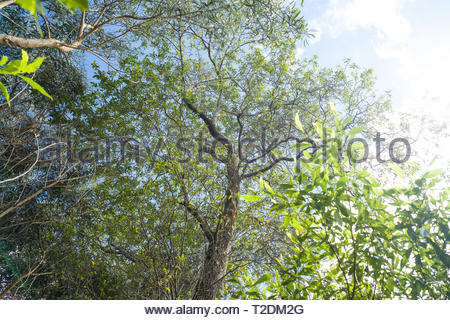
Sandalwood Tree, commonly called 'iliahi, are endemic to ... from l450v.alamy.com This white flowering sandalwood tree only grows on the big island of hawai'i. This assured a steady supply of 'iliahi for years to come. Hawaiians use(d) 'iliahi mainly for minor medicinal treatments and to scent kapa, the bark cloth used for clothing and bedding. The'iliahi company po box 26344 honolulu hi 96825 info@iliahi.com wechat: 4 the history of human impact on the genus santalum in hawaiʻi by mark merlin and dan. Soon the easily accessible stands of sandalwood had been harvested and they had to go farther up the mountain. In hawai'i, human greed was particularly devastating for sandalwood. Santalaceae (sandalwood family) 'iliahialo'e (s llipticum ) 'iliahi , 'a'ahi, 'aoa, a 'ala, 'ala (s eycinetianum, s e, and s aniculatum ) mark d.
Trading was founded in 1791 by capt.
The new king had a short life. By 1830, the trade in sandalwood had completely collapsed. This left a trail of death and destruction not only for the tree but for the hawaiian people as well. This helps to restore the canopy of the original forest. Seven species grew in the islands. By 1821, sandalwood exports totaled about 1,400 tons annually. In the last 3 years alone, háloa áina has used proceeds from their project to plant over 700,000 new sandalwood trees as well as hundreds of thousands of their host trees including koa. More info on 'iliahi aloʻe s.ellipticum. 'iliahi, freycinet sandalwood santalum freycinetianum gaud. Hawaiian sandalwood, or iliahi, naturally dead heartwood for incense, rare variety, wild, santalum elipticum sandalwood wood mysticcraft 5 out of 5. Chinese used the fragrant heart wood for incense, medicinal purposes, for architectural details and carved objects. The trees grow on a 3,000 acre, dry land forest restoration preserve of hawaiian sandalwood where only dead and dying trees are are harvested. Elevitch, pages 696, 698, 702, 703, 705, 709.
Royal sandalwood — $110.00 planted on hawaii island. Santalum is a genus of woody flowering plants, the best known and commercially valuable of which is the indian sandalwood tree, s. Honeybees and native birds love the nectar of 'iliahi blossoms. By 1830, the trade in sandalwood had completely collapsed. The trees grow on a 3,000 acre, dry land forest restoration preserve of hawaiian sandalwood where only dead and dying trees are are harvested.
Santalaceae - Bastard toadflax -- Discover Life from www.botany.hawaii.edu Soon the easily accessible stands of sandalwood had been harvested and they had to go farther up the mountain. Some are shrubs while others become moderately large trees. In the last 3 years alone, háloa áina has used proceeds from their project to plant over 700,000 new sandalwood trees as well as hundreds of thousands of their host trees including koa. 4 the history of human impact on the genus santalum in hawaiʻi by mark merlin and dan. The reforestation program rolled along, planting thousands of trees at schools, parks and forest reserves. Album.members of the genus are trees or shrubs.most are root parasites which photosynthesize their own food, but tap the roots of other species for water and inorganic nutrients.several species, most notably s. The american privateer immediately recognized 'iliahi as sandalwood—a hot commodity in china. This assured a steady supply of 'iliahi for years to come.
'iliahi, a member of the santalaceae family, is a highly variable plant in its growth and form.
The american privateer immediately recognized 'iliahi as sandalwood—a hot commodity in china. The trees grow on a 3,000 acre, dry land forest restoration preserve of hawaiian sandalwood where only dead and dying trees are are harvested. Iliahi (santalum freycinetianum) the endangered native sandalwood of maui. Kendrick set three sailors ashore to collect as much wood as they could find. More info on 'iliahi s. 8 traditional trees of the pacific islands by craig r. This is raw form incense from the 'iliahi tree (santalum paniculatum) that comes from the háloa áina forest which is located on the big island of hawai'i. Discovery of the sweet smelling royal sandalwood 'iliahi by the outside world in 1810 created frenzied trade which all but eliminated the tree from the hawaiian islands by 1830. The flowers are small, located at the ends of branches. This white flowering sandalwood tree only grows on the big island of hawai'i. Album, produce highly aromatic wood, used for scents. Seven species grew in the islands. Getting to the heart of the matter the internationally prized essential oil from sandalwood exists throughout the tree, with the highest concentrations found in the heartwood.
Between 1810 and 1820, sandalwood sold for about $125/ton, generating more than $3 million iliahi tree. Iliahi (santalum freycinetianum) the endangered native sandalwood of maui.